Dust grain properties
There are several plots that show the effective grain properties of the used dustgrains. In all plots, it is possible to transform the particles and data to the observed data that was used.
General properties
To plot the extinction coefficients, albedo, scattering phase function and emission of the used dustgrains (default is astro-silicates) in function of the grain size, use command
dgplot_dustgrains
(Source code, png, hires.png, pdf)
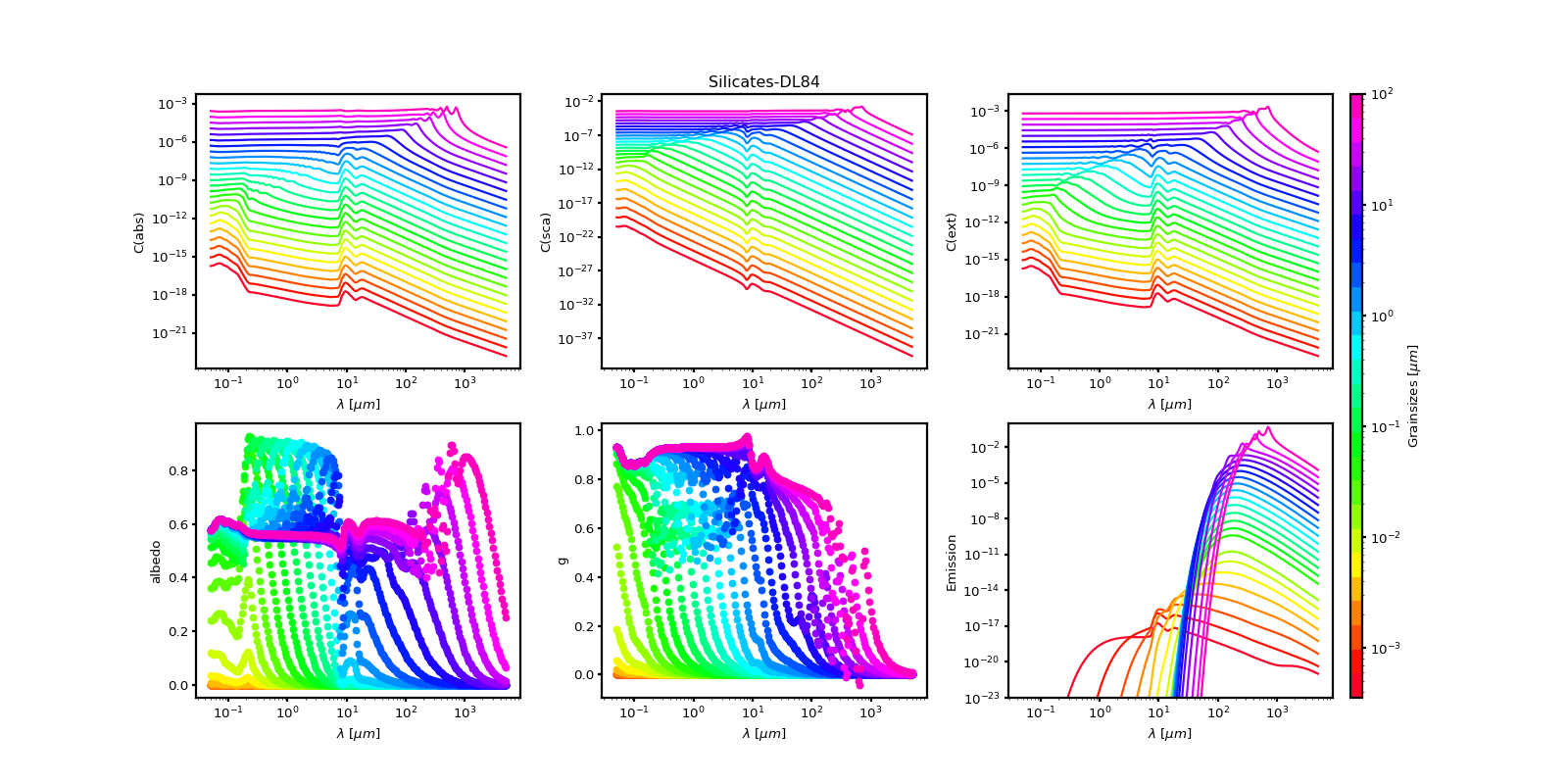
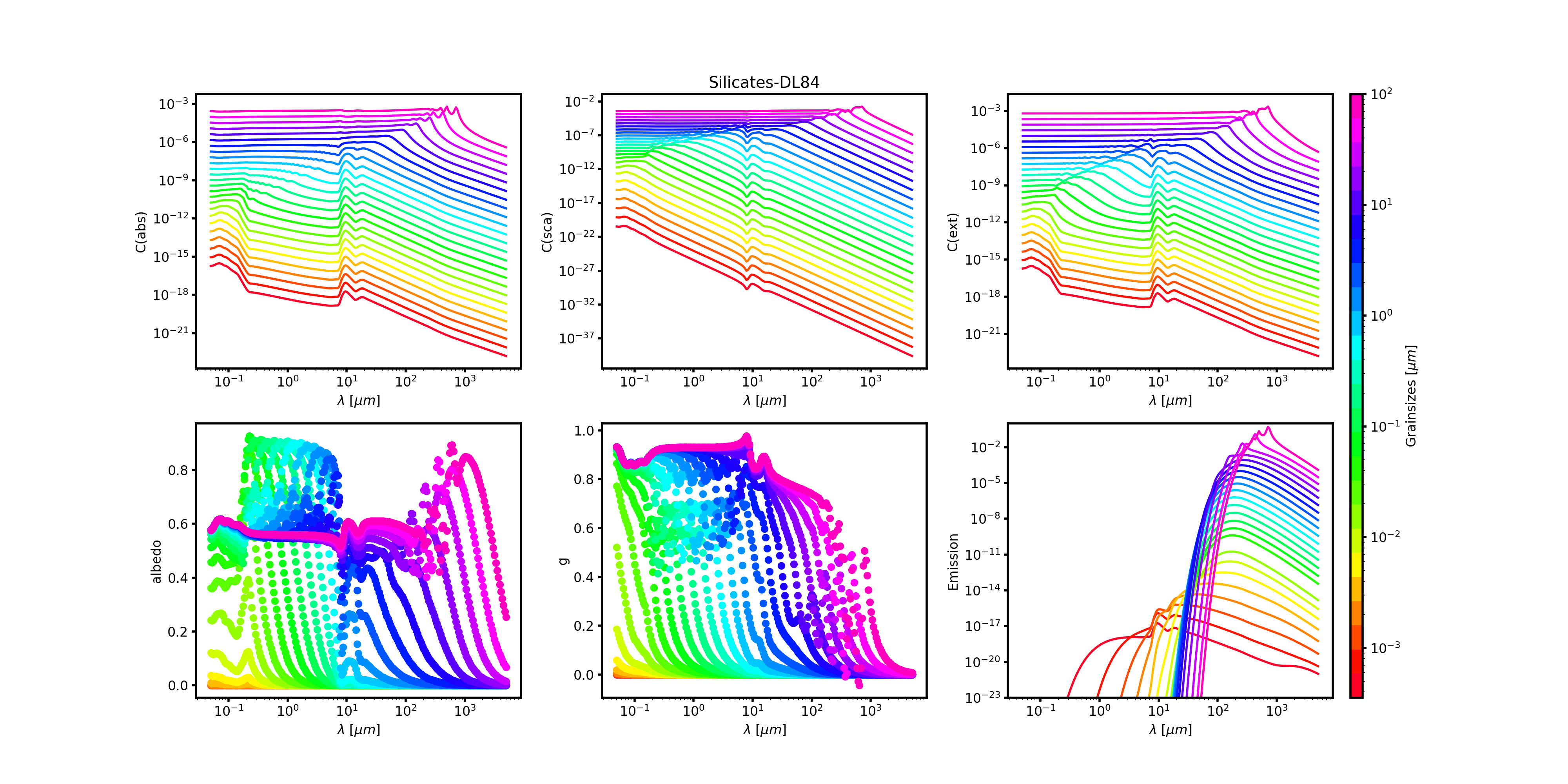
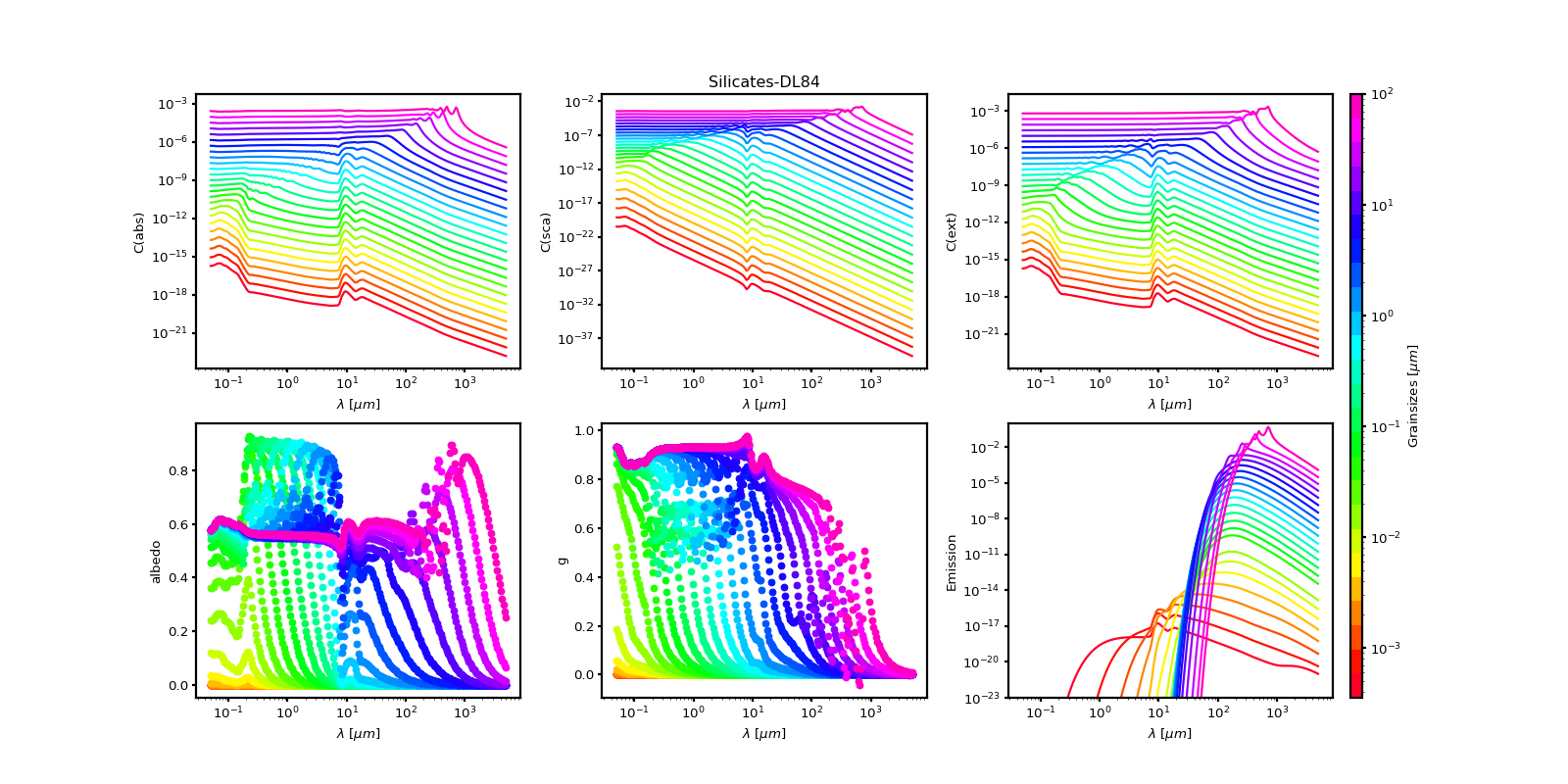
To see other dustgrains, use
dgplot_dustgrains -c <possible>
To transform the particles to the observed data grids and see the data of the dustgrains for the observed dustmodel, use
dgplot_dustgrains --obsdata obsdata
To see the options for saving the plots (for this and future plots), use
dgplot_dustgrains --help
Effective size
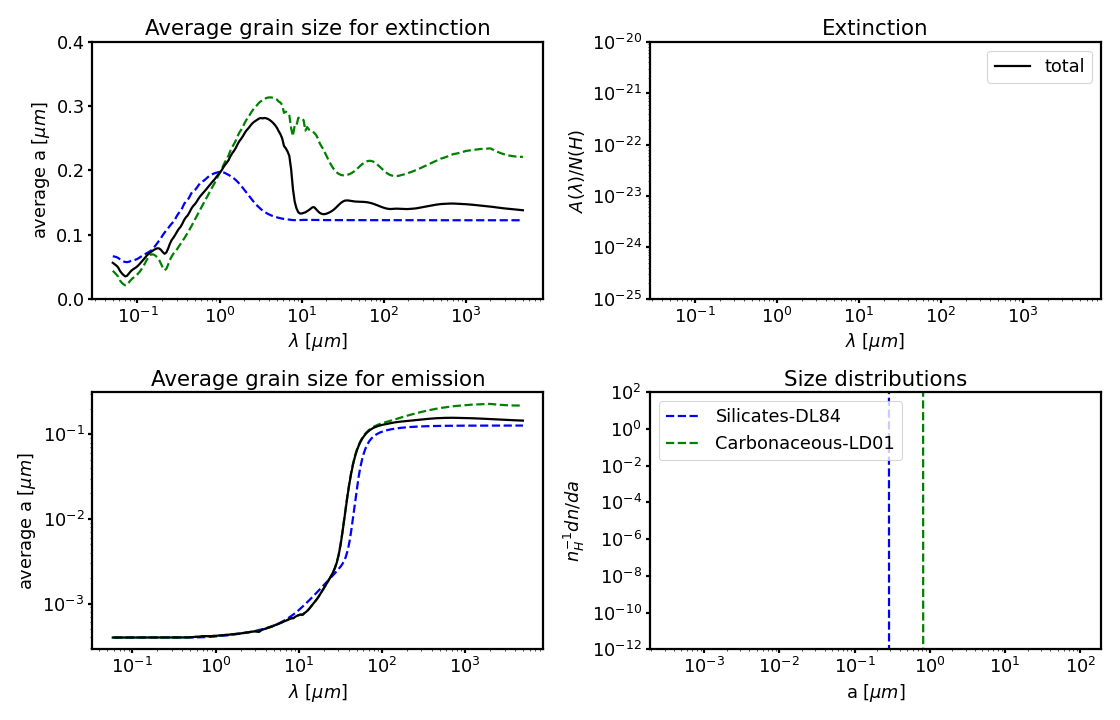
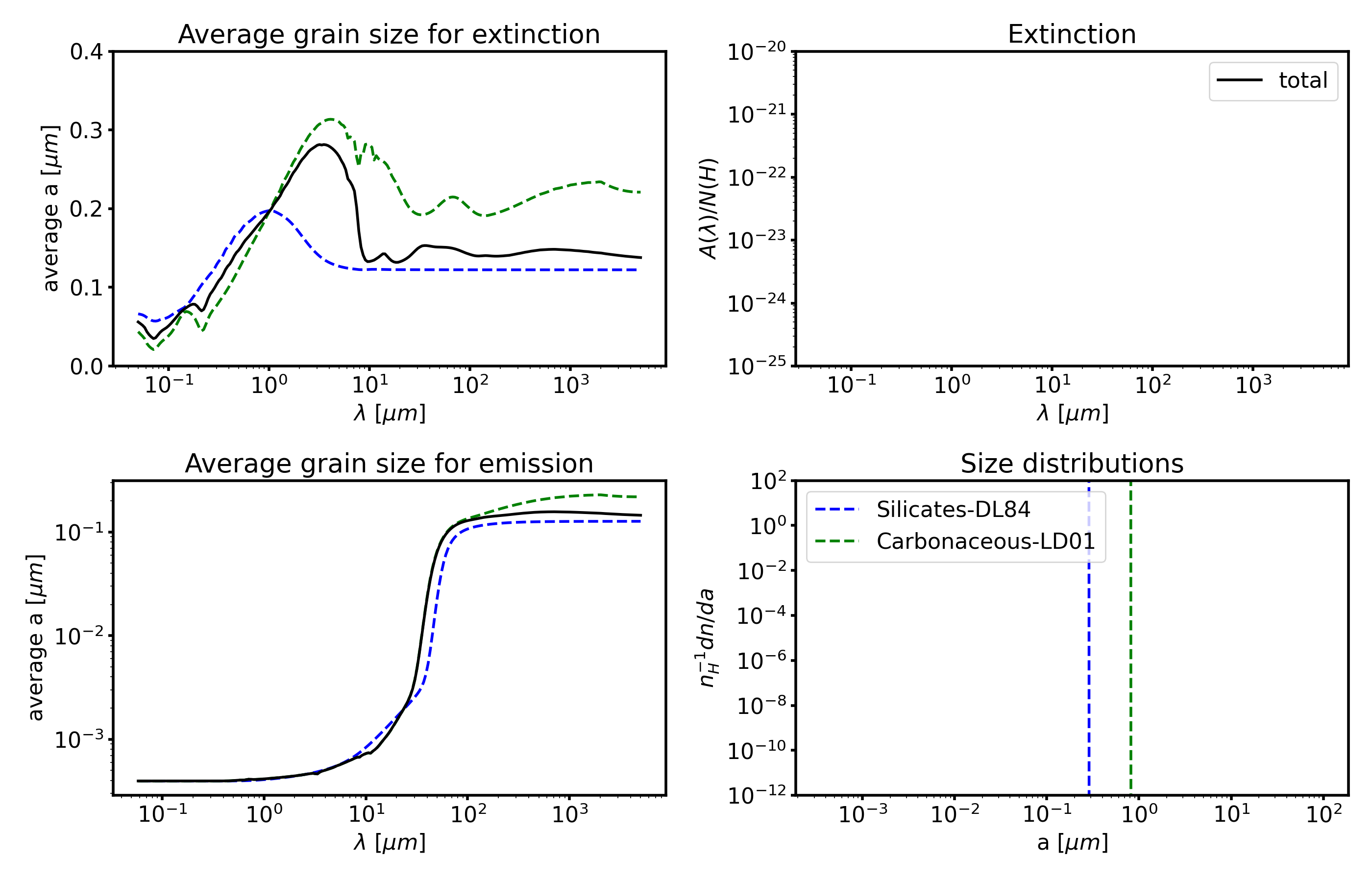
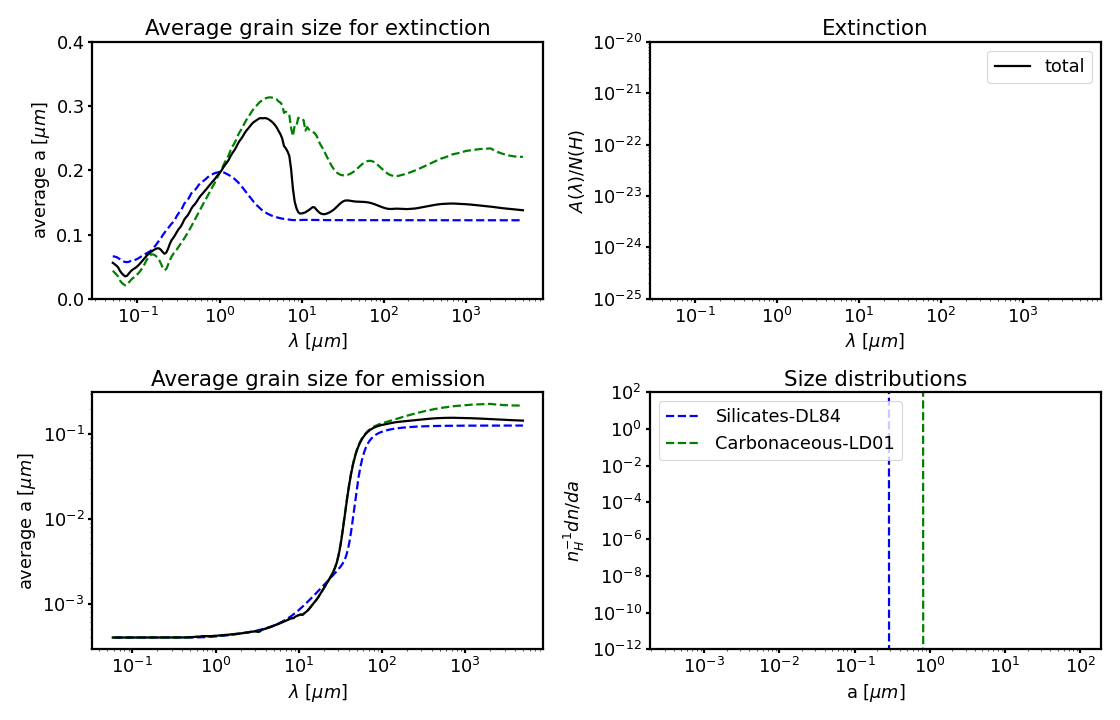
To plot the average dustgrain size in function of wavelength for both extinction and emission, use
dgplot_effsize
(Source code, png, hires.png, pdf)
Single grain properties
Another plot that is available is one that shows the single grain properties. It is devided into four subplots. The first one shows the extinction for a chosen wavelength and composition in function of grain size. The second one shows the same thing but for the emission. The third and fourth subplot show the relative absorpiton and scattering coefficient for a chosen wavelength in function of grain size. To make this plot, use
dgplot_singlegrain_props
(Source code, png, hires.png, pdf)
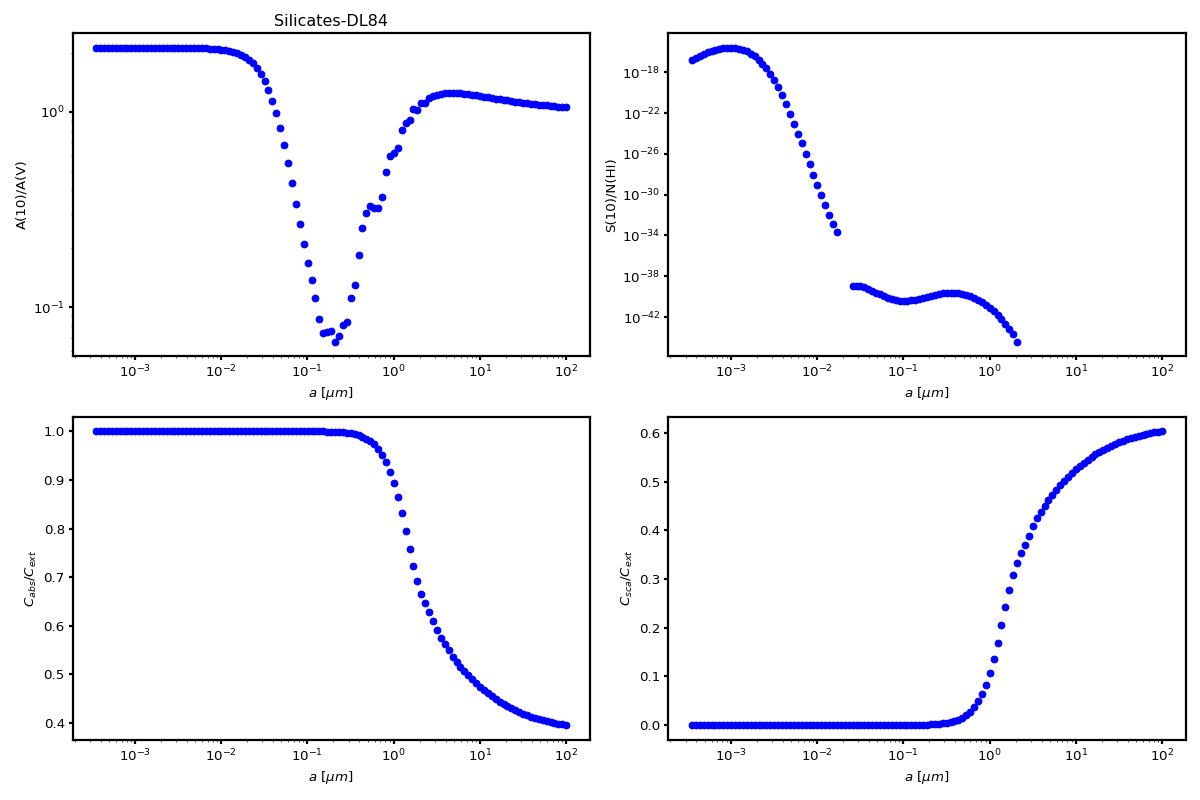
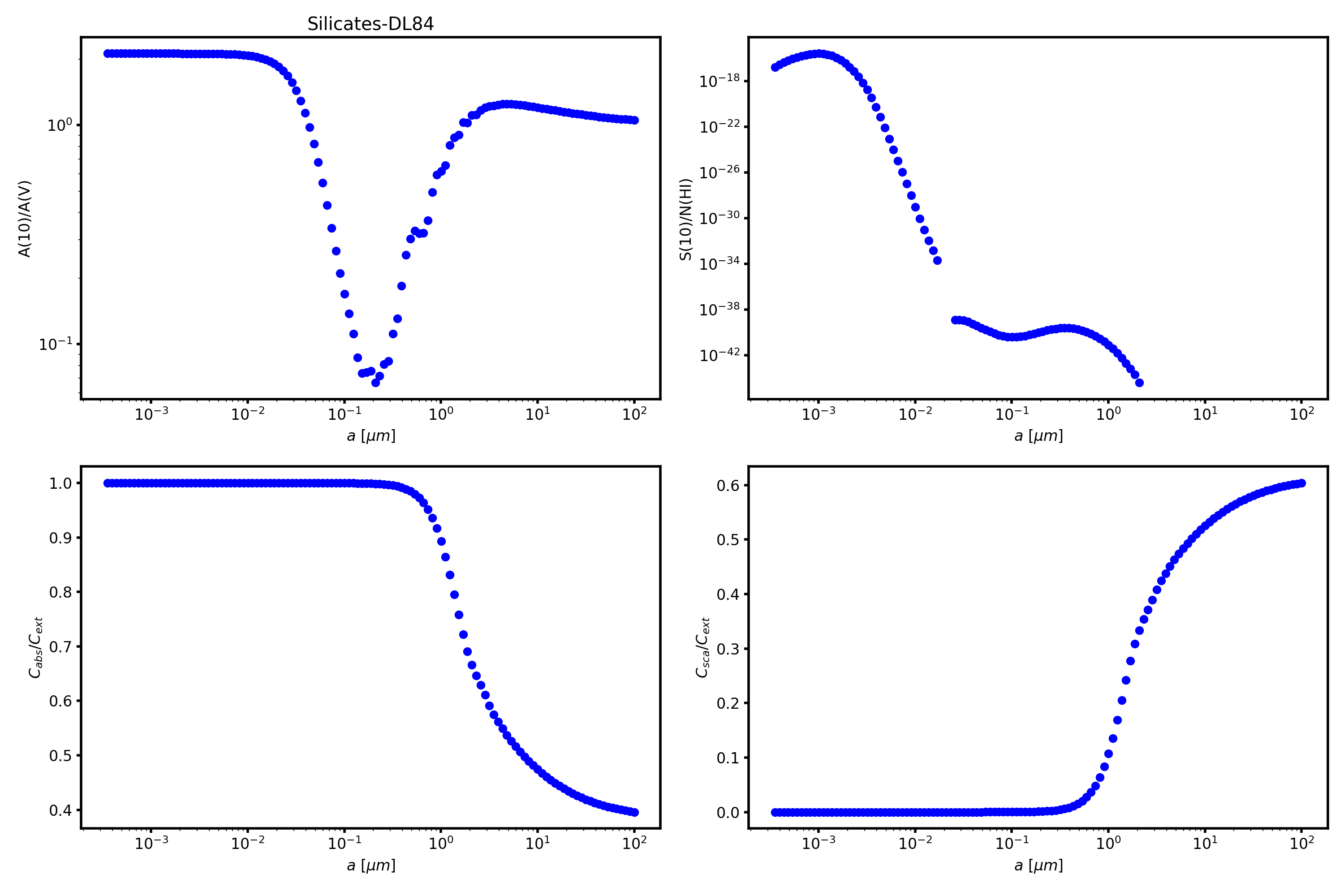
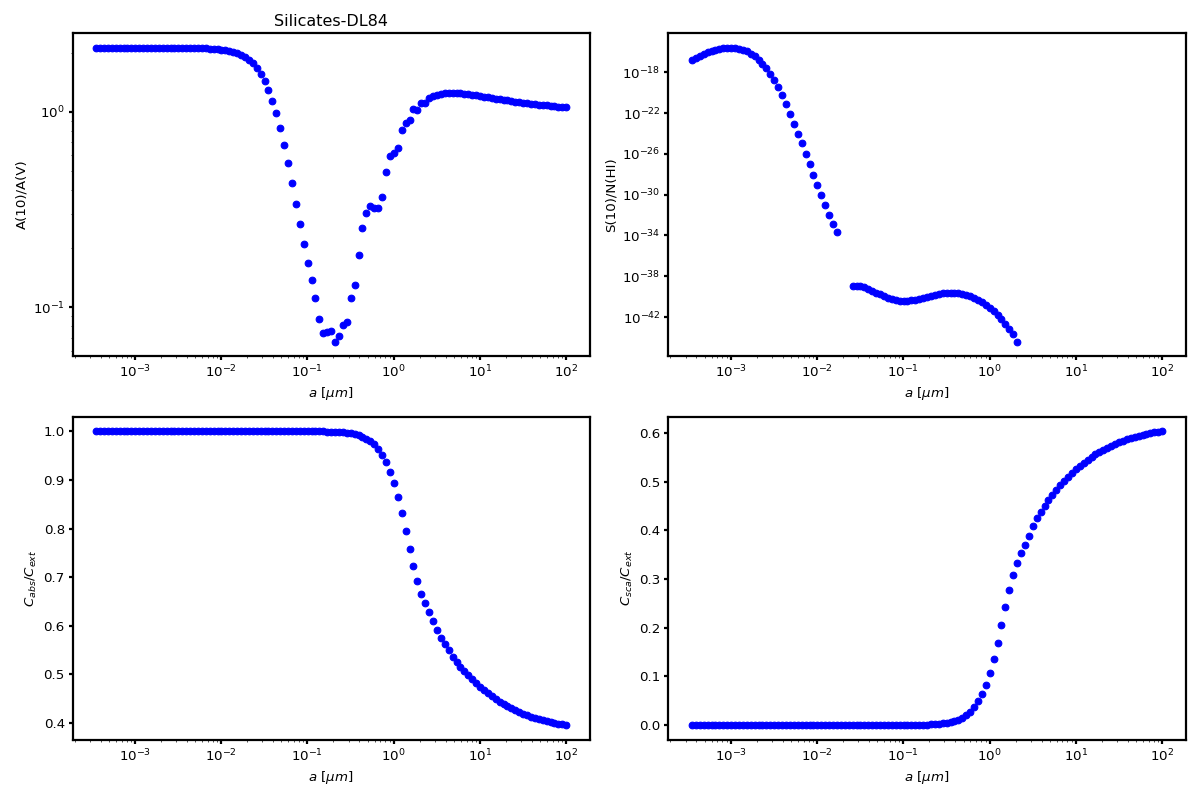
The default wavelength for these plots is 0.1 micron. To choose another wavelength (with the wavelength given in micron), use
dgplot_singlegrain_props --wave wavelength
To see other dustgrains (<possible> = astro-silicates, astro-carbonaceous, astro-graphite, astro-PAH-ionized and astro-PAH-neutral), use
dgplot_singlegrain_props -c <possible>
To transform the particles to the observed data grids and see the data of the dustgrains for the observed dustmodel, use
dgplot_singlegrain_props --obsdata obsdata
R(V)
The last available plotting options shows the extinction-R(V) relation for all different grain sizes and a chosen wavelength and composition. To make this plot, use
dgplot_rv
(Source code, png, hires.png, pdf)
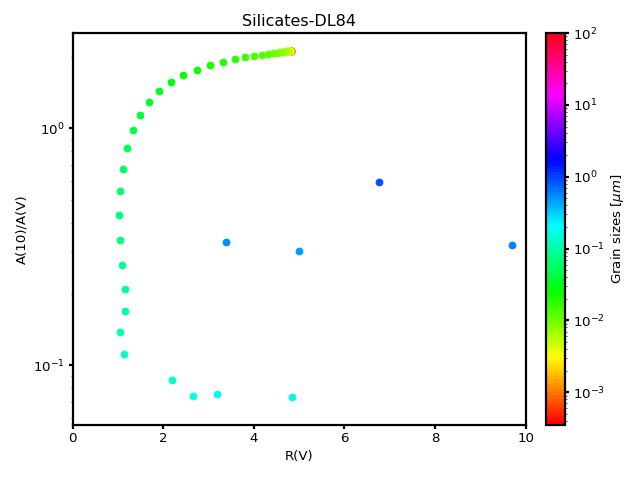
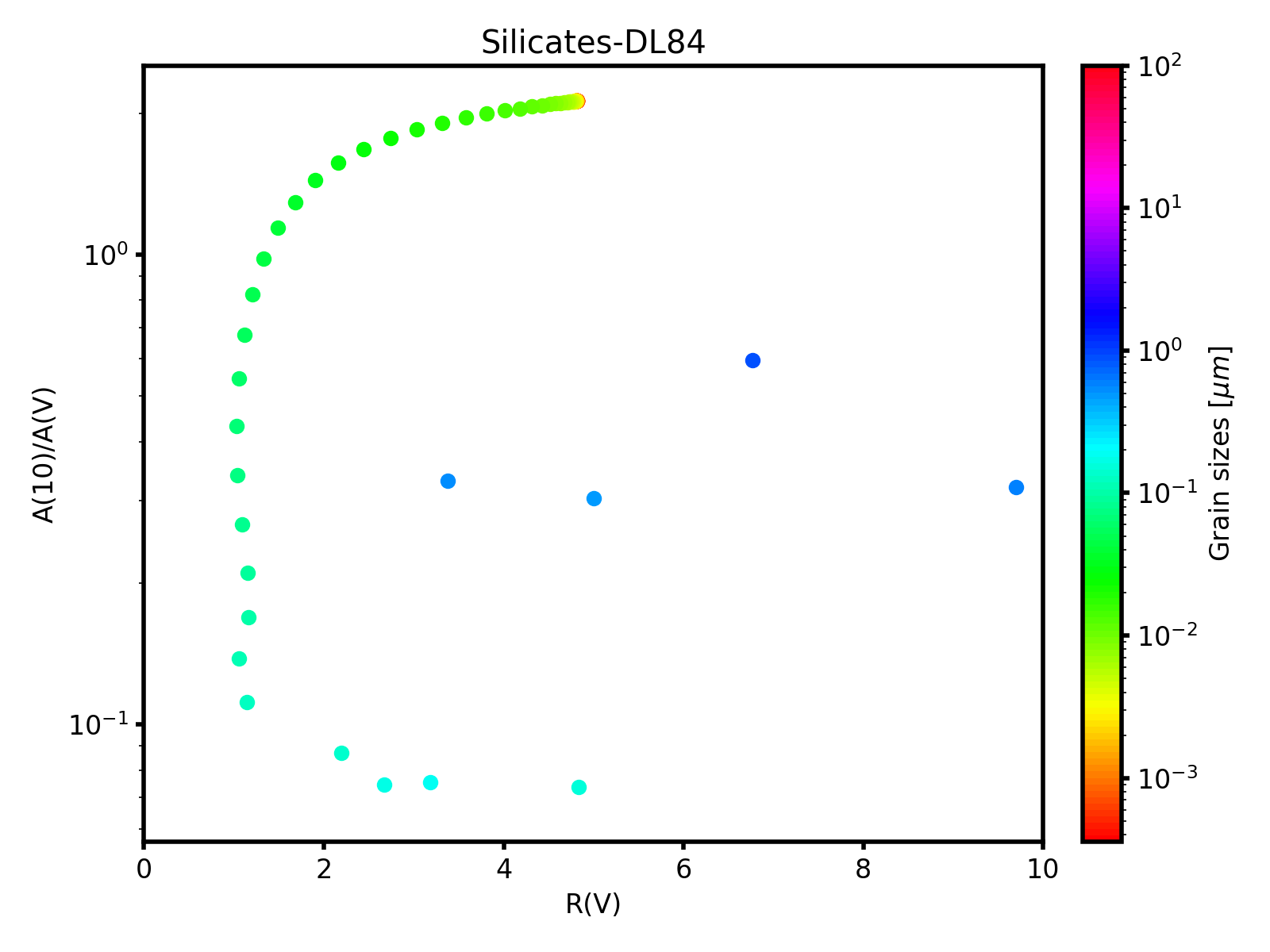
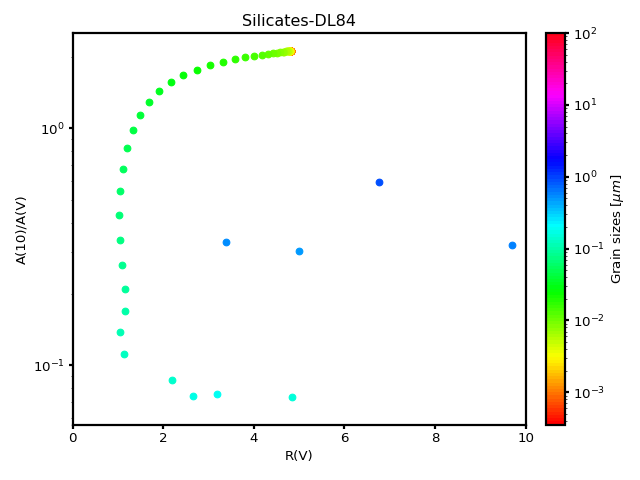
The default wavelength for these plots is 0.1 micron. To choose another wavelength (with the wavelength given in micron), use
dgplot_rv --wave wavelength
To see other dustgrains (<possible> = astro-silicates, astro-carbonaceous, astro-graphite, astro-PAH-ionized and astro-PAH-neutral), use
dgplot_rv -c <possible>
To transform the particles to the observed data grids and see the data of the dustgrains for the observed dustmodel, use
dgplot_rv --obsdata obsdata